
See the Deliverable
See what your first website review actually delivers.
We put Factory Investigator through the same 20-point review offered to manufacturers. Open the evidence, see the three priorities and judge whether the review is detailed enough for your site.
A completed review of our own website—shown so you can judge the work before you request it.

Where we looked
Every public step a manufacturer uses to understand us, trust the evidence and ask for help.
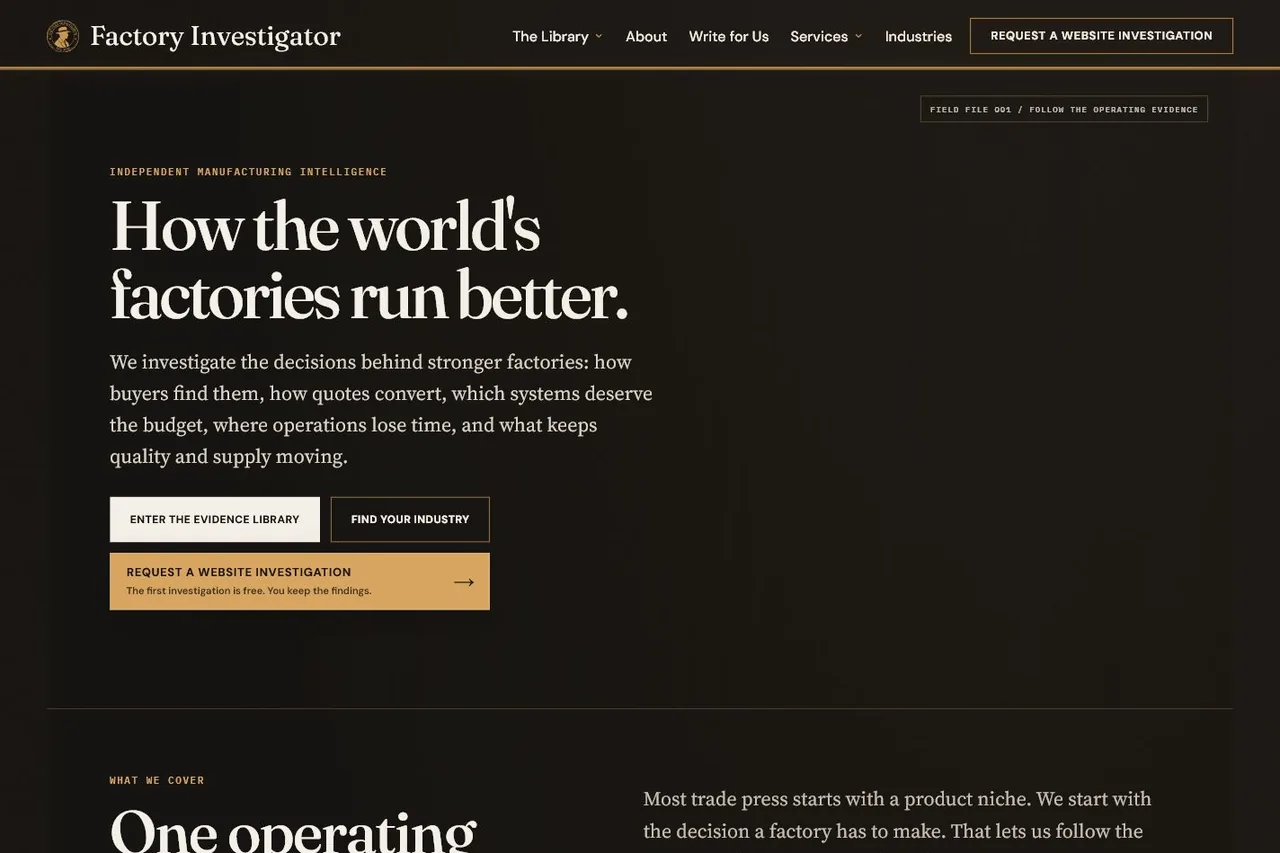
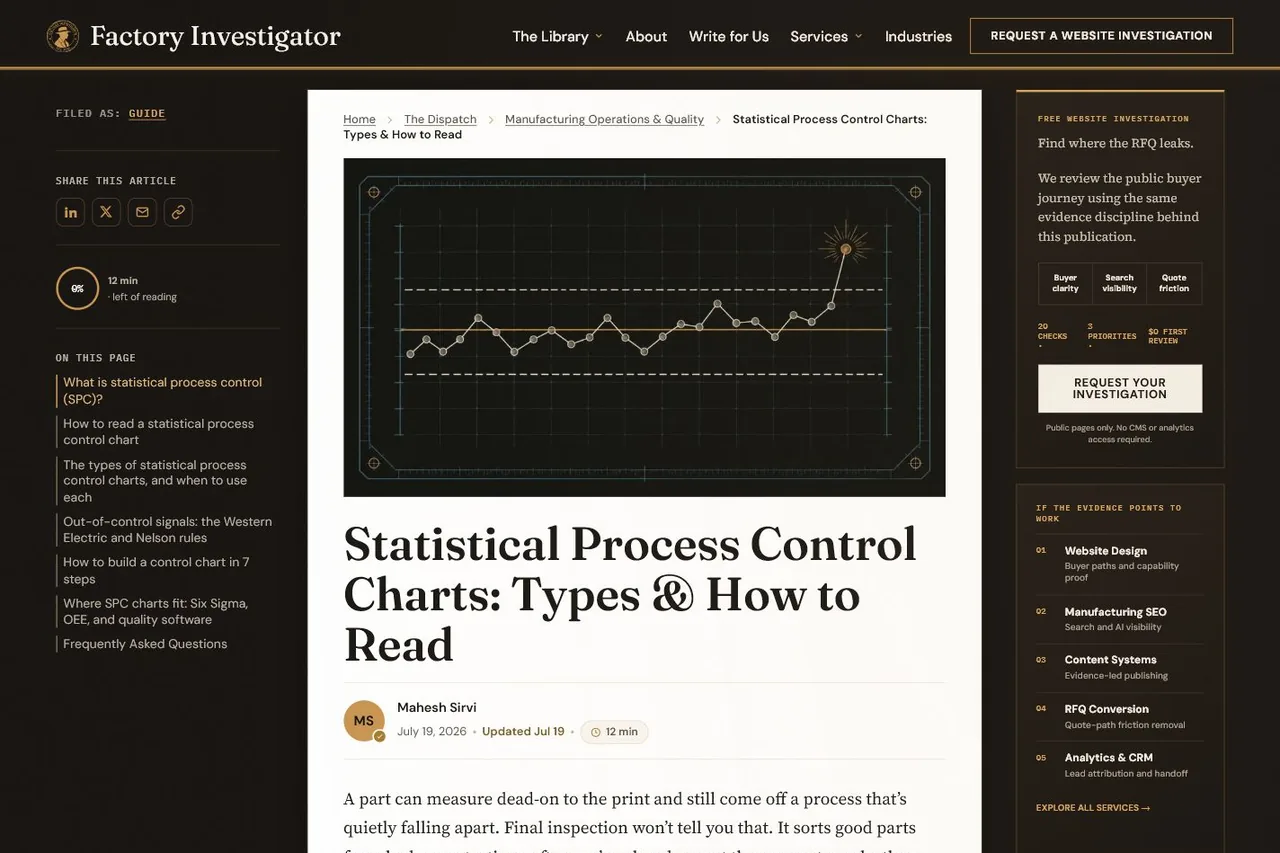
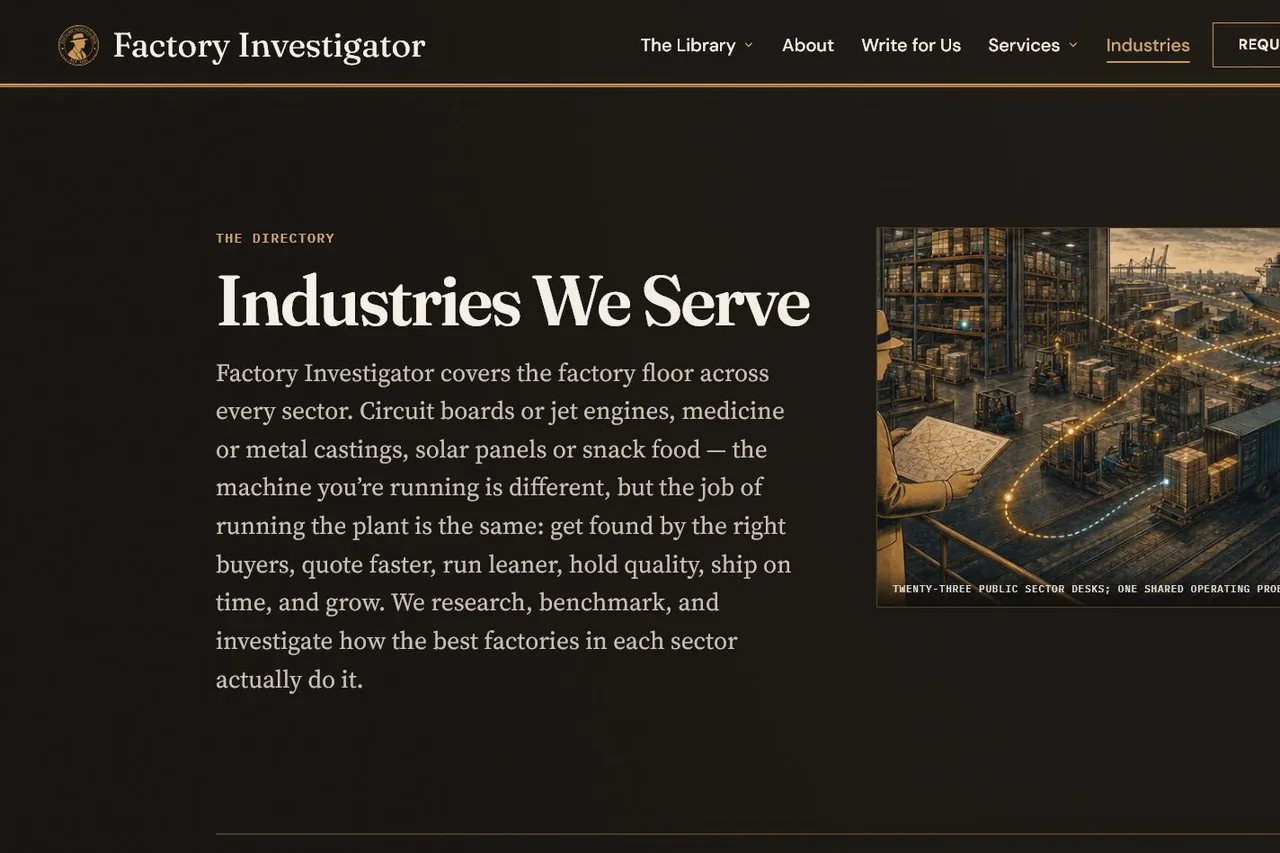
We followed the journey a manufacturer would: arriving on the homepage, choosing a desk or service, reading an article, checking an industry, judging the offer and deciding whether to request a review.
- Homepage promise, visual identity and next-step clarity.
- Navigation, six evidence desks and the five implementation services.
- The $0 review request, including trust, errors and truthful confirmation.
- Article dates, reading tools, policy links and relevant next steps.
- Industry routes, mobile behavior, image delivery and the four self-hosted fonts.
How the review works
Start with what a buyer can see. Verify a fix before calling it done.
We followed the pages a buyer can see on desktop, tablet and mobile, captured what happened and checked each correction before marking it complete. No private analytics or personal information appears in this example.

The 20 checks
The questions that reveal where trust and enquiry paths break.
- Clear promiseCan a manufacturer tell what the site is for and who it helps?
- Buyer trustDoes the identity feel coherent, credible and relevant to factory work?
- Next-step clarityDoes each important page make the next useful action obvious?
- Current navigationCan buyers reach the six live evidence desks without retired labels or dead ends?
- Service discoveryCan the service menu be understood and used with mouse or keyboard?
- Consistent service pagesDo all five services explain the problem, work, boundaries and next step in one recognisable system?
- Useful visual evidenceDo images clarify the work instead of acting like generic decoration?
- Form confidenceDoes the request page explain what will happen and what information is used?
- Helpful errorsWhen a field is wrong, is the problem explained beside it without losing safe answers?
- Honest confirmationCan success appear only after the server accepts a real request?
- Clean measurementDoes one genuine request get counted once—with consent—rather than duplicated?
- Keyboard accessCan a buyer skip, open, move through and close navigation without a mouse?
- Page hierarchyDoes each page have one clear main heading and a logical reading order?
- Readable linksAre policy and contextual links legible, underlined and visible on focus?
- Honest datesAre Published and Updated shown once and only when they mean something?
- Article usefulnessCan readers use the contents, evidence rail and next step without losing the article?
- Industry directoryCan manufacturers find their sector inside a clear grouped directory?
- Industry depthDoes each sector have enough useful evidence, or clearly show that coverage is still developing?
- Mobile and imagesDo pages fit small screens and serve appropriately sized WebP images?
- Readable typographyDo all four self-hosted fonts stay legible in the roles they were chosen for?
What we found on 28 July
A distinctive site was still hiding important work and weakening the path to enquiry.
- The independent review scored the overall public experience 7.5/10.
- The RFQ journey scored 4.5/10 because the site could not yet prove that every visible success message matched a real accepted request.
- Industry coverage was easy to browse but uneven: 15 sector archives were empty and most others were thin. That is a content-depth finding, not a reason to index empty pages.
- The strongest assets were the Investigator identity, information design, editorial policy and substantial individual articles.
- The biggest gaps were enquiry trust, inconsistent page shells, proof a buyer could inspect, thin industry journeys and generic article next steps.
What came first
Three fixes before anything else.
Only show success when a request is real
Errors, confirmation and measurement should all describe what the server actually accepted.
Make every journey feel like one site
Navigation, services, industries, dates and reading tools should share one recognisable system.
Let buyers inspect the work
Show the pages checked, evidence captured and priorities chosen before asking anyone to trust a claim.
What changed
What a buyer would notice now.
Fixed and checked in public
- One skip link, six current desks and consistent global navigation.
- Clear dates, readable policy links and a more useful article rail.
- Enquiry errors, confirmation and repeat attempts now agree on whether the request was genuinely accepted.
- Five distinct responsive service images inside consistent service pages.
Improved, with more work open
- The industry directory is clearer, but useful sector depth remains uneven.
- This completed review makes the work inspectable; it is still an example using our own site.
- Article next steps now match reader intent and make the next useful action easier to find.
What only real usage can show
- Inbox receipt and spam placement under a controlled live test.
- Revenue, ranking, enquiry or qualified-lead outcomes.
- Field Core Web Vitals across real visitors and devices.
- Which developing industries warrant deeper public hubs.
What you receive
A practical file your team can act on.
- Public pages and buyer journeys reviewed.
- Dated screenshots showing exactly what was observed.
- Findings ranked by severity and confidence.
- Three priorities in the order they should be addressed.
- Quick corrections separated from work requiring testing.
- Clear status: fixed, in progress or still unproven.
- What the public review can establish—and what needs private data or later testing.
- Limitations stated plainly—without inflated promises.
Read this honestly
What this sample can—and cannot—prove.
This is a dated review of our own public site. It demonstrates the method and deliverable, not a promise of revenue, rankings, enquiries, inbox delivery or Core Web Vitals for another site.
Your website under the lens
Find the three problems worth fixing first.
Share your public site. If the review can give you a useful answer, we will check 20 points and return three priorities—no CMS, login or analytics access. You can use the findings yourself; implementation is optional.